|
|
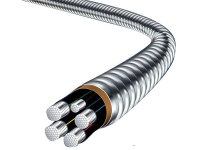
110kV cross-linked polyethylene insulated power cable
Collect
商品说明
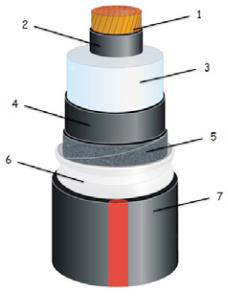
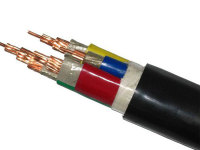
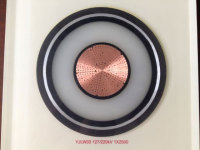
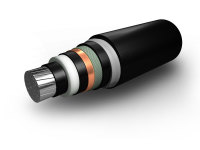
The 110kV cross-linked polyethylene insulated power cable produced by Shandong Yanggu Cable Group is suitable for 110kV high-voltage and ultra-high-voltage transmission and distribution lines. It can be laid in tunnels or pipelines and can withstand a certain amount of pressure. The cable has good longitudinal and radial waterproof properties. 1. Product execution standards 1. GB/T 11017.1-2014 Cross-linked polyethylene insulated power cables and accessories with rated voltage 110kV (Um=126kV) Part 1: Test methods and requirements 2. GB/T 11017.2-2014 Cross-linked polyethylene insulated power cables and accessories with rated voltage 110kV (Um=126kV) Part 2: Cables 3. IEC 60840-2011 Test methods and requirements for extruded insulated power cables and accessories with rated voltages above 30kV (Um=36kV) to 150kV (Um=170kV) 2. Cable structure
1. Conductor 5. Buffering water blocking layer 2. Inner shield 6. Metal sheath 3. Insulation 7. Outer sheath 4. External shielding 3. Product characteristics 1. Conditions of use Rated voltage: U/U0 (Um) = 64/110 (126) kV Conductor cross-sectional area (mm²): 240-1600 Temperature 24 hours before laying PVC sheathed cable: ≥0℃; The maximum allowable long-term operating temperature of cable conductors: 90°C; Maximum operating temperature of the cable during short circuit (maximum 5s): 250℃ Minimum allowable bending radius of cable: 20D. Note: D is the actual outer diameter of the cable. 2. Structural requirements 1) conductor The conductor is made of twisted copper wire or aluminum wire. The conductor cross-section is 800mm2 and below using a layer-by-layer compression method. The conductor has good roundness and a high compression coefficient. Split conductors are used for conductor cross-sections of 1000mm2 and above, which effectively reduces the skin effect of the conductor and increases the carrying capacity of the cable. For split conductors, our company produces conductors with a maximum cross-section of 3000mm2. Water-absorbing swelling material can be twisted into the conductor to achieve longitudinal water blocking along the conductor. 2) Insulation Conductor shielding, insulation, and insulation shielding are made of three layers of VCV vertical towers extruded simultaneously. The company's vertical cross-linking workshop is 129m high. It is equipped with three vertical cross-linking production lines. The three production lines were imported from Maillefer of Finland and TROESTER of Germany. All three production lines are equipped with front and rear preheating systems, which can effectively remove moisture in conductors and make insulation heating more uniform. The production lines are all equipped with German Sikora online deflection meters to control insulation eccentricity within the minimum range. The online stress relief system can effectively reduce the residual stress inside the insulated core and further improve the electrical and mechanical properties of the cable. All three production lines adopt fully dry cross-linking and cooling methods. 3) Degas the insulation Due to the thick insulation thickness of high-voltage and ultra-high-voltage cross-linked polyethylene insulated power cables, cross-linking by-products will be produced under cross-linking conditions of high temperature and high pressure. In order to speed up the release of cross-linking by-products, the cross-linked wire core must be placed before entering the next production process. Enter the insulated wire core constant temperature drying room for degassing treatment. Accelerating gas discharge effectively reduces the possibility of accidents during cable laying and operation. 4) Longitudinal water blocking layer and buffer layer In order to buffer the thermal expansion of the cable insulation during operation and achieve waterproofing of the cable, there is a buffering and water-blocking layer between the insulation shield and the metal sheath. The company uses semi-conductive buffering and water-blocking tape with excellent expansion buffering performance to wrap around the insulation. The conductivity of the resistive water tape is uniform, and there is a margin between the metal sheath and the buffer layer that can absorb the expansion of the cable core under cyclic load and short-circuit temperature rise. 5) Wrinkled aluminum sleeve The company's metal sleeve production processes include extruded aluminum sleeves and welded aluminum sleeves, which can be produced according to user needs. The aluminum sleeve can meet the cable short-circuit capacity requirements, is light in weight, strong in strength, easy to bend, and has excellent waterproof performance. There is cable asphalt or hot melt adhesive on the outside of the aluminum sleeve as an anti-corrosion layer. 6) Outer sheath The outer sheath is PE or PVC, and flame retardant, termite-proof, low-smoke low-halogen flame-retardant, low-smoke halogen-free flame retardant and other materials can also be provided according to customer requirements. A semi-conductive layer is extruded on the outer sheath at the same time to serve as an electrode for the outer sheath voltage test. 4. Cable model, name, laying occasion Conductor material code Type 2 copper conductor - (T) omitted; aluminum conductor - L Insulation material code YJ-cross-linked polyethylene insulation Sheath material code 02-Polyvinyl chloride sheath; 03-Polyethylene sheath; Q-Lead sheath; Wrinkled aluminum sheath-LW; Metal-plastic composite sheath-A; Water blocking structure code Longitudinal water blocking structure-Z
相关商品
|
||||||||||||||||||||||||||||||||